
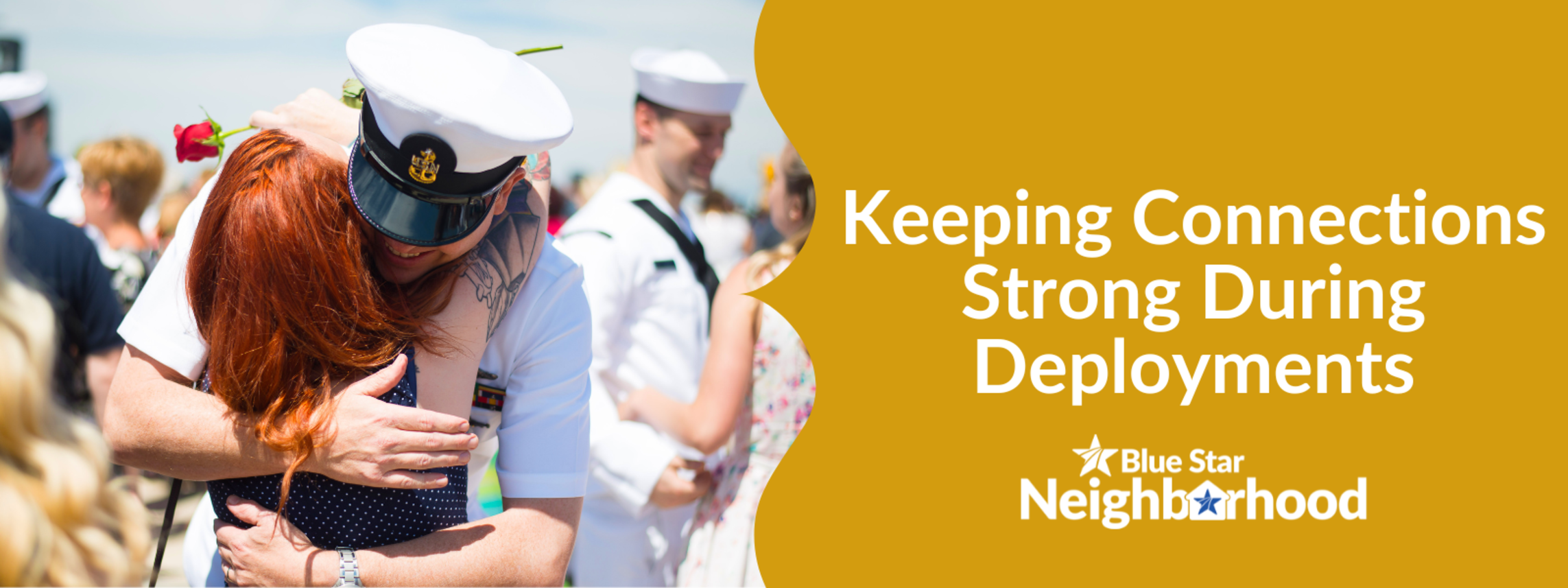
Keeping Connections Strong During Deployments
By Sierra Martinez | Senior Manager, Digital Marketing & Innovation
Deployments don't affect just one person; they touch the entire family. Spouses are thrust into shouldering additional responsibility, parents are balancing feelings of pride and worry, and children are forced to understand why someone they love and rely on is so far away. Maintaining connection during deployment isn't always easy, and it rarely looks how we imagine, but connection doesn't disappear with distance — it just changes.
Below, I've put together some ways for families to stay connected during deployments, even when communication is limited. During my husband's first deployment to Afghanistan, communication was sparse (does anyone else remember SAT phones?). Two months went by before I heard his voice for the first time, and I had to continually remind myself that no news was good news.
One of the most challenging parts of deployment is the unpredictability. Calls get missed because time zones don't align. Internet access comes and goes, and messages sometimes go unanswered. Logistically, things are hard! And when you factor in emotions, both sides can end up feeling lonely, overwhelmed, or unimportant.
That's why redefining what connected means during deployments can be helpful. Talking daily is not something to expect, so remember to:
-
Trust your bond even during silence.
-
Prioritize quality conversations over quantity.
-
And when communication feels hard, give each other grace.
Remember: Connection is about emotional presence, not constant contact.
For spouses and partners, deployment can feel like living two separate lives. You're holding down the home front while trying to stay emotionally close to someone far away. It's important to:
-
Be honest about your feelings.
-
Share small, everyday moments.
-
Use letters, voice notes, or care packages to create a sense of intimacy.
Disagreements can feel bigger when you're apart. When that happens, try to pause, clarify intentions, and revisit the conversation later if needed. Remember, even though you're not together, you are still on the same team.
Parents often carry a unique combination of pride, fear, and helplessness during deployment. It's natural to want reassurance, but too much worry-focused communication can add stress to your service member. You can stay connected without pressure by:
-
Leading with encouragement and love.
-
Sending care packages.
-
Telling them how proud you are.
Sometimes the most supportive message is simply: "You are greatly missed and loved."
Kids experience deployment differently depending on their age, personality, and understanding of the situation. What they need most is reassurance, routine, and space to feel their feelings. You can help your kids feel connected by:
-
Sharing age-appropriate explanations about deployment.
-
Consistent daily routines at home.
-
Visual reminders like photos, countdown chains, or even maps.
Let kids talk openly about missing their parent(s), even when it's uncomfortable. You don't have to fix their sadness to support them. If you're looking for activities to keep you busy while your service member is deployed, check out our Military Families Outdoors Resources and Blue Star Perks to help you stay busy and connected.
Remember, connection takes time: every letter, voice message, shared playlist, or book matters. The little things are what keep us grounded and connected, no matter how much distance or time has passed. If you're navigating deployment right now, how are you maintaining connection? Comment below, I'd love to hear from you.